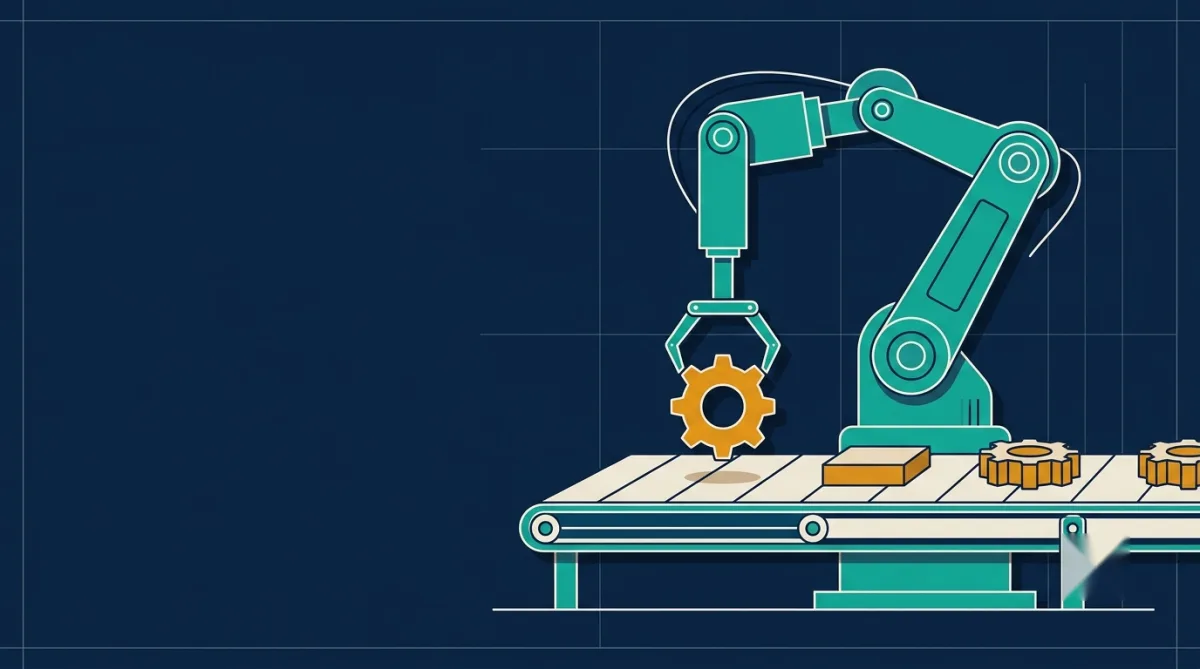
Every day, the world demands more from us more tasks, more speed, more results. Some jobs repeat endlessly, while others are so unexpected that our usual methods fail completely.
Programming was created for one reason: to give us our time back.
By automating repetitive work, code turns hours of effort into seconds of execution freeing us to think, create, and solve real problems.
In a world that keeps speeding up, automation isn’t a luxury.
It’s how we reclaim our day.
Computers weren’t always the powerful machines we rely on today. Long before them, people used the abacus an early calculating tool that simplified arithmetic but still needed human intervention and rigid, hard-coded rules. It wasn’t a computer; it was only an aid, limited by the skill of the person using it.
Fast forward to the era of modern computing, and everything has changed. Today we write programs that control everyday systems like elevators and calculators, as well as sophisticated simulations in computational fluid dynamics, heat transfer, and advanced engineering analysis.
Tasks that once demanded rare expertise can now be automated, accelerated, and scaled thanks to the evolution of programming and the machines that execute it.
A Brief History of Programming Languages: How Coding Evolved From 1843 to Today
Programming may feel like a modern invention, but its story began nearly two centuries ago long before smartphones, cloud computing, or even the first electric computer. The history of coding is a remarkable journey shaped by mathematicians, visionaries, wartime breakthroughs, and the rise of personal and internet-connected devices.
Here’s a chronological journey through the development of programming languages from Ada Lovelace’s algorithm to today’s modern coding ecosystem.
The Birth of Programming (1840s–1930s)

Difference Engine The completed portion of Charles Babbage’s Difference Engine, 1832.

Analytical Engine A portion (completed 1910) of Charles Babbage’s Analytical Engine.
1843 — Ada Lovelace Writes the First Algorithm Note G
The world’s first programmer envisioned that numbers could represent more than math. Her insight laid the foundation for the idea of a programmable machine decades before computers existed.
1936 — Alan Turing Defines Modern Computing
Turing introduced the concept of a universal machine that could follow instructions marking the theoretical birth of software and programmable computers.
Early Machine Languages (1940s–1950s)
1940s — Plankalkül
Konrad Zuse created the first high-level programming language, enabling stored programs and automated routines.
1949 — Assembly & Short code
Computing steps became simpler and more structured, forming the basis of all system-level programming today.
1952–1959 — The First High-Level Languages
- Autocode (1952): First automatically translated language
- FORTRAN (1957): Focused on science and math; still used today
- ALGOL & LISP (1958): Influenced nearly every modern language
- COBOL (1959): Became the backbone of business computing, banks, and government systems

The Era of Structured Programming (1960s–1980s)
1964 — BASIC
Created to help students learn programming later commercialized by young Bill Gates.
1970 — Pascal
Simple and clean syntax made Pascal the go-to language for early Apple machines.
1972 — C, Smalltalk & SQL
A golden year for programming.
- C became the foundation for Unix and modern languages like Java, C#, Python, and JavaScript.
- Smalltalk introduced object-oriented programming.
- SQL revolutionized database interaction.
1980s — The Rise of Modern Systems
- ADA (1980s): Used in aviation and defense
- C++ (1983): Powered high-performance apps and games
- Objective-C (1983): Became Apple’s backbone
- Perl (1987): Popular for scripting and data processing

The Internet Age (1990–2000)
1991 — Python & Visual Basic
Python’s simplicity and flexibility sparked a revolution; today it dominates AI, data science, and backend development.
1993 — Ruby
A developer-friendly language for web apps.
1995 — Java, JavaScript & PHP
Three giants born in one year:
- Java: “Write once, run anywhere” perfect for enterprise and mobile
- JavaScript: The language of the web
- PHP: The engine behind Facebook, WordPress, and millions of websites

Cloud, Mobile & Modern Development (2000–Today)
2000s — Efficiency & Scale
- C# (2000): Microsoft’s modern flagship
- Scala & Groovy (2003): Blended object-oriented and functional programming
- Go (2009): Google’s answer to scalable cloud systems
2014 — Swift
Apple’s modern, safer, and faster language for iOS and macOS apps.

Today & Tomorrow: Where Programming Is Headed
Many early languages like FORTRAN, COBOL, and LISP still power critical systems. Meanwhile, new languages keep emerging to support:
- AI & machine learning
- Cloud-native systems
- Mobile apps
- High-performance computing
Just as Ada Lovelace couldn’t imagine the digital world her ideas would unlock, today’s breakthroughs in AI, quantum computing, and automation will shape the next century of programming.
The Future Is Being Written One Line of Code at a Time
From the abacus to AI-driven automation, programming has evolved from a human-dependent tool to a force that shapes industries, accelerates innovation, and simplifies everyday life. Each era of coding solved the limitations of the one before it and today, we’re standing at the edge of a new frontier where machines don’t just follow instructions; they learn, adapt, and evolve.
Whether you’re an engineer, a student, or a curious beginner, this journey isn’t just history it’s an open invitation. The next breakthrough, the next idea, the next leap in technology could come from you.
If you’re ready to build, automate, and imagine what’s next start learning, start experimenting, and start coding today. The future is programmable.